
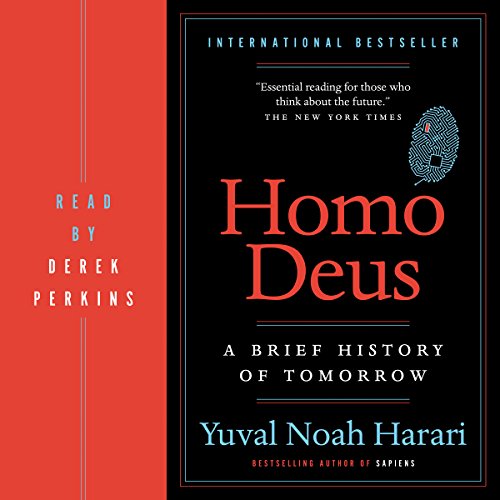
Book Details
- Genre: Non-Fiction / Futurism / Philosophy / History
- Themes:
- Artificial Intelligence and Dataism
- Humanism and Post-Humanism
- Future of Consciousness and Ethics
- Science vs. Religion
- Technological Utopianism and Existential Risk
One-Sentence Summary
Homo Deus explores how humanity’s historic quest to conquer famine, war, and disease may give rise to new ambitions—immortality, happiness, and divinity—challenging our current ethical, social, and philosophical foundations.
Main Takeaways & Insights
- Past Success Sets the Stage: With famine, plague, and war largely contained (relatively), humans are now free to pursue “higher” goals—longevity, pleasure, and god-like abilities (hence Homo Deus, or “god-man”).
- The Rise of Dataism: Harari introduces a new worldview that elevates data and algorithms over individual human experience, potentially replacing humanism as the dominant ideology.
- Intelligence ≠ Consciousness: The future may belong to highly intelligent machines that lack consciousness, which raises questions about moral value and authority.
- Ethics in Evolution: Homo sapiens’ ethical codes, rooted in religion or humanism, may be ill-equipped to govern a future driven by artificial intelligence, biotechnology, and predictive algorithms.
- Power Shift: The book forecasts that decision-making power will shift from humans to algorithms—impacting medicine, justice, relationships, and identity.
Key Quotes
“History began when humans invented gods, and will end when humans become gods.”
“Organisms are algorithms. Every animal—including Homo sapiens—is an assemblage of organic algorithms shaped by natural selection.”
“In the twenty-first century, the most interesting place in the world from a religious perspective is not the Middle East, but Silicon Valley.”
Personal Reflection
Homo Deus is provocative, speculative, and sometimes unsettling. Harari’s style is clear yet deeply philosophical, forcing readers to reflect on not only where we are headed, but whether we’re equipped—ethically or emotionally—to handle it. I found his framing of humanism’s potential obsolescence particularly powerful. While not every prediction will land, the book succeeds in challenging complacency and demanding that we question what we value as progress.
