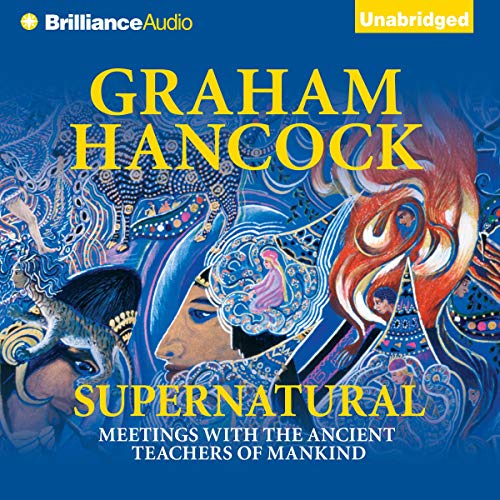
Book Details
- Genre: Non-Fiction / Alternative History / Spirituality
- Themes:
- Human Origins and Consciousness
- Shamanism and Altered States
- Ancient Cave Art and Symbolism
- Entheogens and Visionary Experiences
- Intersections of Myth, Religion, and Psychedelics
One-Sentence Summary
In Supernatural, Graham Hancock explores the provocative idea that ancient cave art, religious visions, and alien abduction narratives stem from interactions with non-physical intelligences encountered during altered states of consciousness.
Main Takeaways & Insights
- Cave Art as a Window to Other Realities: Hancock proposes that ancient cave art—especially from the Upper Paleolithic era—documents visionary experiences, not just symbolic or utilitarian imagery.
- Shamanic Journeys Across Time: Drawing from modern ethnographic studies and neuropsychology, Hancock links ancient shamanic practices with contemporary accounts of altered states induced by psychedelics.
- Entheogens as Consciousness Technology: He suggests that substances like DMT may open access to non-ordinary realms populated by intelligent entities—possibly the same “teachers” revered in prehistoric spiritual traditions.
- Alien Abductions and Ancient Spirits: Hancock draws parallels between modern alien abduction reports and traditional spiritual encounters, implying they may share a common altered-state origin.
- Radical Evolution of Human Consciousness: A core argument is that the development of abstract thought and symbolic communication may have been catalyzed by such experiences, contributing to the cognitive revolution.
- Challenging Materialism: The book critiques conventional scientific materialism, suggesting consciousness may not be solely brain-based and that humanity’s origins may involve dimensions science has yet to grasp.
Key Quotes
“Perhaps it is consciousness, not matter, that is fundamental.”
“The supernatural is not the impossible; it is the unexplained.”
“Are we the only intelligent species in the universe—or just one of many with different modes of existence?”
Personal Reflection
Supernatural is not an easy book to categorize—it’s a blend of anthropology, neuroscience, mythology, and speculative metaphysics. While its hypotheses push against mainstream academic boundaries, Hancock’s synthesis is bold, imaginative, and grounded in compelling cross-cultural patterns. Whether or not you accept his conclusions, the book forces you to rethink assumptions about human consciousness, spirituality, and our forgotten prehistory. It’s an intellectual and visionary journey that leaves you questioning what we really know about our origins.
