
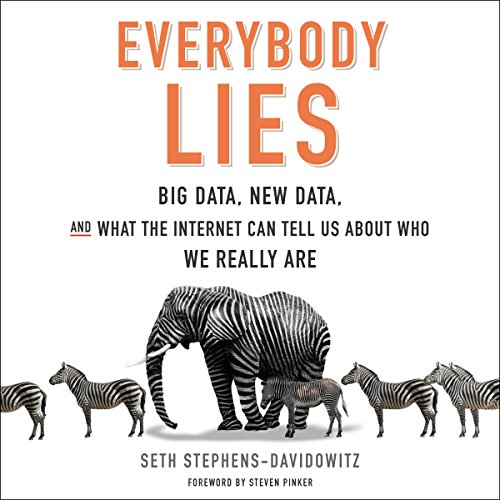
Book Details
- Genre: Non-Fiction / Data Science / Behavioral Economics
- Themes:
- Big Data and Human Behavior
- Internet Anonymity and Truth
- Predictive Analytics
- Bias, Prejudice, and Hidden Desires
- Data-Driven Decision-Making
One-Sentence Summary
Using massive datasets from Google searches, social media, and online behavior, Seth Stephens-Davidowitz reveals the surprising—and often uncomfortable—truths people hide from the world but share with the internet.
Main Takeaways & Insights
- People Lie in Surveys—But Not Online: Traditional polls often fail because people give socially acceptable answers, while anonymous internet searches reveal raw, unfiltered truths.
- Google Search Data Is a Goldmine: Analyzing billions of search queries offers insights into human fears, desires, prejudices, and habits that people wouldn’t admit publicly.
- Racism and Bias Are More Widespread Than Reported: The data shows that bigotry remains alarmingly common—even in areas where public attitudes appear tolerant.
- Sex, Parenting, and Insecurity: Search patterns expose anxieties around sex, parenting doubts, and deep-seated insecurities people rarely discuss.
- Big Data as a New Microscope: Rather than just predicting trends, big data helps us explore causality and detect subtle patterns that traditional methods miss.
- Power and Limits of Data: While data reveals much, it can also mislead if interpreted without context. The book emphasizes the importance of critical thinking in data analysis.
Key Quotes
“People are honest on Google. They tell Google what they might not tell anyone else.”
“The internet is the world’s largest and most honest focus group.”
“Big data is revolutionizing what we know about the human condition—but it’s also showing how little we sometimes understand ourselves.”
Personal Reflection
Everybody Lies is both provocative and revelatory. It challenges assumptions about what people really think and how they behave, using data not just as a tool for analysis but as a lens into the human psyche. Seth Stephens-Davidowitz makes a compelling case for treating internet data as a new form of social truth—sometimes disturbing, often counterintuitive, but always revealing. For anyone interested in psychology, sociology, or data-driven storytelling, this is an essential read that shifts how you interpret the digital world around you.
