
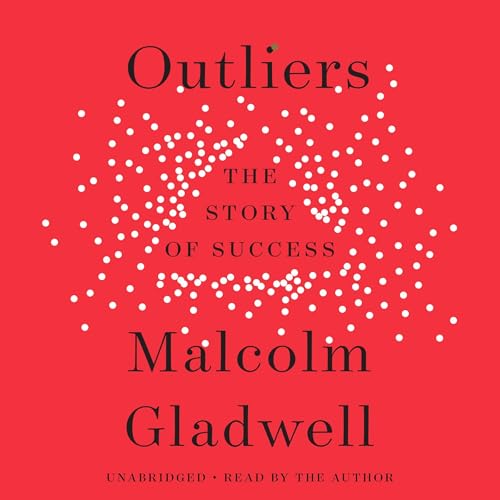
Book Details
- Genre: Non-Fiction / Psychology / Sociology
- Themes:
- Success and Opportunity
- Social and Cultural Influences
- Talent vs. Practice
- Hidden Advantages
- Systems and Structures
One-Sentence Summary
In Outliers, Malcolm Gladwell deconstructs the myth of individual merit by showing how external factors—timing, culture, upbringing, and opportunity—play a decisive role in extraordinary success.
Main Takeaways & Insights
- The 10,000-Hour Rule: Mastery in any complex field often requires 10,000 hours of dedicated practice—a threshold rarely reached without support, early exposure, or lucky timing.
- Success Is Contextual: Birth dates, socioeconomic background, and cultural legacies dramatically influence who gets opportunities, access, and recognition.
- Hidden Advantages: Successful people often benefit from invisible privileges—like being born in the right year (as with Bill Gates) or growing up in a culture that values persistence.
- The Matthew Effect: “The rich get richer” applies to talent and success—early advantages compound over time, leading to exponentially better outcomes.
- Cultural Legacy Shapes Behavior: National, ethnic, and regional cultures affect how people communicate, solve problems, and perform under pressure (e.g., airline cockpit communication failures).
- Redefining Individual Achievement: Personal effort matters, but success is rarely the product of hard work alone—it’s the intersection of individual drive and favorable conditions.
Key Quotes
“Success is not a random act. It arises out of a predictable and powerful set of circumstances and opportunities.”
“Practice isn’t the thing you do once you’re good. It’s the thing you do that makes you good.”
“No one—not rock stars, not professional athletes, not software billionaires, and not even geniuses—ever makes it alone.”
Personal Reflection
Outliers fundamentally shifts the narrative of success from one of isolated brilliance to one rooted in systems, timing, and legacy. Gladwell dismantles the romantic ideal of the self-made genius, urging readers to acknowledge how deeply context matters. This book isn’t just about the anatomy of success—it’s a call to reassess how we view merit, reward, and opportunity. It’s particularly powerful in helping leaders, educators, and institutions design more equitable systems that recognize unseen talent.
