
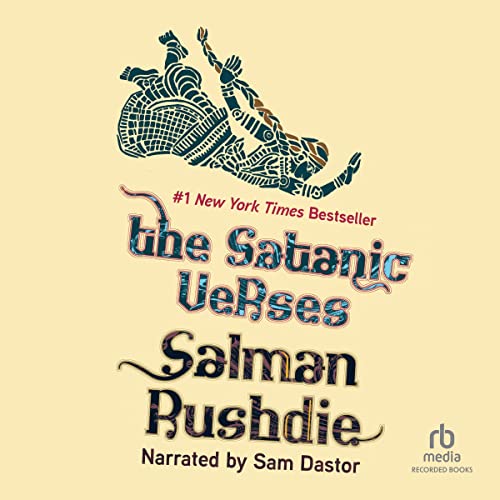
Book Details
- Genre: Fiction / Magical Realism / Literary Fiction
- Themes:
- Identity and Transformation
- Faith vs. Doubt
- Immigration and Cultural Dislocation
- Myth and Reality
- Free Expression and Blasphemy
One-Sentence Summary
A surreal and controversial tale of two men who survive a terrorist attack and undergo miraculous transformations, The Satanic Verses explores the intersections of religion, identity, and imagination in a world fractured by migration and belief.
Main Takeaways & Insights
- Duality and Metamorphosis: The protagonists, Gibreel and Saladin, represent conflicting aspects of the immigrant experience—divinity and devilishness, assimilation and alienation.
- A Blurring of the Sacred and the Profane: Rushdie weaves dream sequences and allegories that mirror religious texts, particularly Islam, challenging literal interpretations and provoking thought on spiritual authority.
- A Story of Exile: The novel probes what it means to be dislocated—geographically, culturally, and spiritually—highlighting the hybrid identities of migrants in the modern world.
- Narrative as Power: Storytelling is used as a tool of both resistance and reinvention; it questions whose voices are heard and whose truths are accepted.
- The Cost of Dissent: The novel became a flashpoint for debates on censorship, blasphemy, and freedom of expression, leading to global controversy and a fatwa issued against Rushdie.
Key Quotes
“What kind of idea are you? Are you the kind that compromises, does deals, accommodates itself to society, aims to find a niche, to survive; or are you the cussed, bloody-minded, ramrod-backed type of damnfool notion that would rather break than sway with the breeze?”
“Language is courage: the ability to conceive a thought, to speak it, and by doing so, to make it true.”
“A poet’s work… to name the unnameable, to point at frauds, to take sides, start arguments, shape the world, and stop it from going to sleep.”
Personal Reflection
The Satanic Verses is a daring, densely layered exploration of identity, belief, and the postcolonial psyche. Rushdie’s prose demands close attention, oscillating between satire and the sacred. The novel doesn’t offer answers—it interrogates, provokes, and dismantles. While its controversy has often overshadowed its literary achievement, its fearless engagement with cultural taboos and its bold narrative architecture secure its place as one of the most powerful works of late 20th-century fiction.
