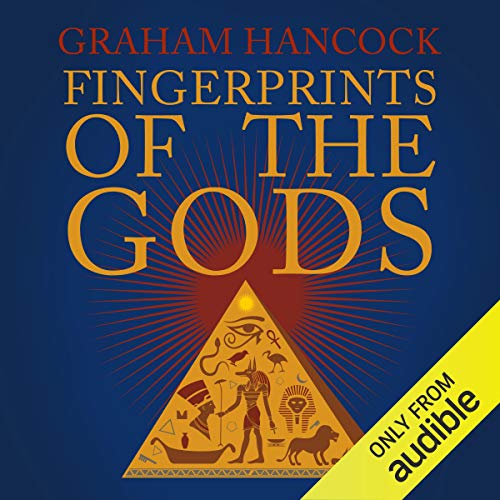
Book Details
- Genre: Alternative History / Archaeology / Ancient Mysteries
- Themes:
- Lost Civilizations
- Ancient Cataclysms
- Pseudoscience vs. Mainstream Academia
- Historical Amnesia
- Myth as Encoded Memory
One-Sentence Summary
Graham Hancock challenges conventional archaeological narratives by arguing for the existence of an advanced prehistoric civilization lost to cataclysmic events, whose knowledge may be encoded in ancient myths and monuments around the world.
Main Takeaways & Insights
- A Hidden Chapter in Human History: Hancock proposes that humanity’s past is deeper and more complex than mainstream archaeology admits, suggesting the existence of a sophisticated civilization before the end of the last Ice Age (~12,000 years ago).
- Myth as Historical Code: Ancient myths from different cultures—such as those of floods, sky gods, and civilizing heroes—may be remnants of real events and knowledge passed down through symbolic storytelling.
- Geological and Astronomical Clues: He points to evidence like the erosion patterns on the Sphinx, ancient maps like the Piri Reis chart, and alignments of monuments (such as those at Giza and Tiwanaku) that suggest astronomical sophistication and a much earlier origin.
- Cataclysm Theory: The book speculates that a global catastrophe, possibly involving comet impacts or sudden climate shifts, wiped out an advanced civilization, and survivors seeded knowledge to later cultures like the Egyptians and Mayans.
- Rejection of Academic Orthodoxy: Hancock criticizes what he sees as dogmatic resistance within academic institutions, advocating for more open inquiry into alternative theories about human origins and ancient knowledge systems.
Key Quotes
“We are a species with amnesia.”
“I suspect that the memories of a great global catastrophe have been passed down to us in myths and legends from around the world.”
Personal Reflection
Fingerprints of the Gods is both provocative and polarizing. While it diverges sharply from established scientific consensus, its appeal lies in its ability to ignite curiosity about humanity’s forgotten past. Hancock’s writing is passionate and cinematic, blending fieldwork with speculation to weave a compelling narrative. Whether taken as literal truth or mythological metaphor, the book encourages readers to question historical certainties and remain open to possibilities beyond the textbooks. For those with a deep appetite for mystery and meaning, it’s an irresistible journey into the echoes of ancient wisdom.
