
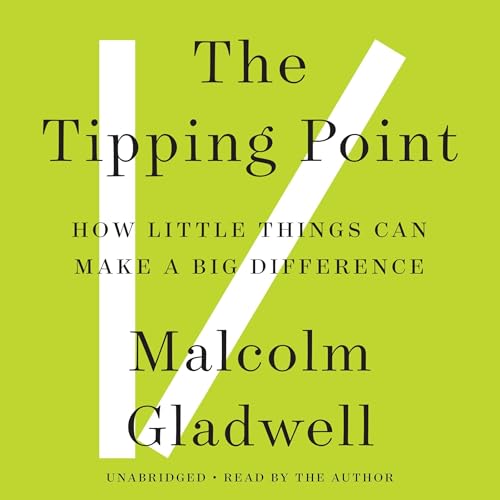
Book Details
- Genre: Psychology / Sociology / Behavioral Economics
- Themes:
- Social Epidemics
- Influence & Contagion
- Behavioral Change
- Network Effects
- The Power of Small Actions
One-Sentence Summary
Gladwell explores the moment when an idea, trend, or behavior crosses a threshold and spreads like wildfire, arguing that seemingly small factors can trigger large-scale social changes.
Main Takeaways & Insights
- The Tipping Point Defined: A tipping point is the critical threshold at which an idea, trend, or behavior tips into wide adoption—similar to how one infected person can start an epidemic.
- Three Key Agents of Change:
- The Law of the Few – A small group of people (Connectors, Mavens, and Salesmen) disproportionately drive the spread of ideas.
- The Stickiness Factor – The message itself must be memorable and impactful.
- The Power of Context – Small changes in environment or timing can dramatically influence outcomes.
- The Broken Windows Theory: Minor signs of disorder (like graffiti or broken windows) can foster larger-scale decline, highlighting how context shapes behavior. Gladwell uses this to explain crime drops in NYC during the 1990s.
- Social Contagion is Nonlinear: Social behavior doesn’t scale linearly—small changes in influencers or environment can create outsized effects when the right conditions are met.
- Word-of-Mouth Matters: Influence spreads less through mass media and more through person-to-person interactions, especially when trusted individuals act as bridges across social groups.
Key Quotes
“The tipping point is that magic moment when an idea, trend, or social behavior crosses a threshold, tips, and spreads like wildfire.”
“Emotion is contagious.”
“Look at the world around you. It may seem like an immovable, implacable place. It is not. With the slightest push—in just the right place—it can be tipped.”
Personal Reflection
The Tipping Point shifts how we perceive influence and social change. Gladwell masterfully distills complex dynamics into digestible narratives, showing that monumental shifts often originate from unnoticed patterns and tiny interventions. While some critics argue the book oversimplifies phenomena, its strength lies in sparking a mindset shift: that small, strategic actions—amplified by the right people and environment—can spark wide-reaching impact. It’s a must-read for marketers, leaders, and anyone interested in the science of human behavior.
