
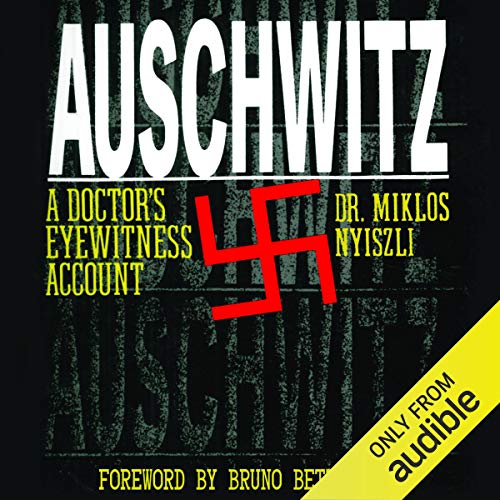
Book Details
- Genre: Memoir / Holocaust History / Medical Ethics
- Narrator: N/A (written account)
- Themes:
- Survival and Complicity
- The Ethics of Medicine under Tyranny
- Holocaust Testimony
- Psychological Trauma
- Moral Ambiguity in Extreme Conditions
One-Sentence Summary
Auschwitz: A Doctor’s Eyewitness Account is a chilling, firsthand narrative by Jewish physician Miklos Nyiszli, who was forced to assist Dr. Josef Mengele in the Auschwitz crematoriums, offering one of the most disturbing and intimate portraits of the Nazi death machinery.
Main Takeaways & Insights
- Medicine as a Tool of Horror: Nyiszli’s position placed him at the heart of Mengele’s human experiments, where the practice of medicine became a grotesque instrument of torture, racial pseudoscience, and dehumanization.
- A Firsthand Account of the Sonderkommando: Nyiszli witnessed the systematic extermination process inside Auschwitz’s crematoria, providing haunting details on the logistics of mass murder, the daily operations, and the emotional state of fellow prisoners forced to do this work.
- Moral Gray Zones of Survival: Nyiszli’s testimony explores the impossible choices made by those granted temporary survival in exchange for roles complicit with Nazi atrocities, challenging readers to judge without the clarity of hindsight.
- Scientific Observation Amid Inhumanity: His medical background gave him a unique lens to document atrocities with a clinical eye, preserving truths the Nazis hoped to erase, while raising unsettling questions about detachment and duty.
- A Testament of Witness: The book is not merely a memoir, but a cry of remembrance. It confronts the reader with facts that resist abstraction or sanitization, demanding engagement with history’s rawest edge.
Key Quotes
“To know the truth and remain silent is to be complicit.”
“In Auschwitz, there were no heroes—only the living, the dying, and the dead.”
Personal Reflection
Reading Auschwitz: A Doctor’s Eyewitness Account is a profoundly disturbing yet necessary experience. Nyiszli does not seek to justify his role—he offers it as a brutal testament. The book forces us to look into the machinery of genocide not through detached historical summaries but through the eyes of a man who lived within its cogs. This is not a story of redemption or triumph; it is a record of horror, moral compromise, and unimaginable suffering. And it is exactly for that reason it must be read.
