
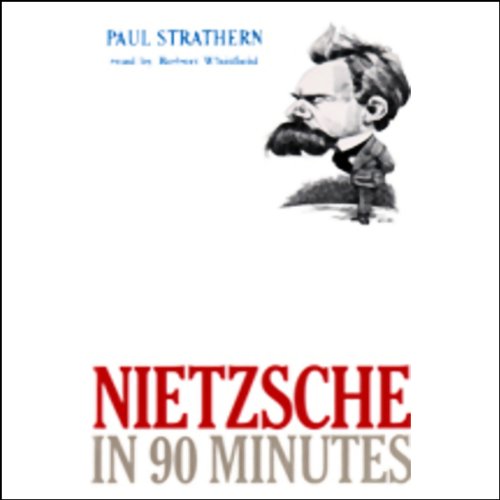
Book Details
- Series: Philosophers in 90 Minutes
- Genre: Philosophy / Biography / Introduction to Thinkers
- Narrator: Simon Vance (audiobook edition)
- Themes:
- Existentialism & Nihilism
- The Will to Power
- Morality & Religion
- The Übermensch Concept
- Nietzsche’s Life & Legacy
One-Sentence Summary
Strathern delivers a concise, witty, and digestible portrait of Friedrich Nietzsche, distilling his radical philosophical ideas and tumultuous life into a 90-minute intellectual primer.
Main Takeaways & Insights
- Life Shaped the Philosophy: Nietzsche’s isolation, chronic illness, and strained personal relationships profoundly shaped his rejection of conventional morality, organized religion, and herd mentality.
- God Is Dead — And That Matters: One of Nietzsche’s most famous declarations, this concept isn’t atheism for its own sake, but a critique of the decline of moral absolutes in a modern, secularizing world.
- The Will to Power: Nietzsche believed that life’s driving force wasn’t survival or pleasure, but a fundamental will to exert one’s influence, create, and overcome limitations—especially internal ones.
- Beyond Good and Evil: He criticized binary morality systems, arguing that values are historically constructed and must be re-evaluated by strong individuals unafraid to defy tradition.
- The Übermensch (Overman): Nietzsche envisioned a person who forges meaning and morality on their own terms—someone who rises above societal conformity and embodies self-mastery.
- Mental Collapse and Legacy: Strathern also explores Nietzsche’s tragic mental breakdown, contrasting it with the later appropriation (and misinterpretation) of his work by various ideological movements.
Key Quotes
“Nietzsche didn’t want followers—he wanted challengers.”
“The greatest challenge of life is to become who you are.”
“Morality is not universal—it is a narrative written by the powerful.”
Personal Reflection
This short book functions like a philosophical espresso shot—intense, sharp, and energizing. While it doesn’t dive deeply into every nuance of Nietzsche’s thought, it offers enough substance to understand why he remains one of the most provocative thinkers in history. Strathern’s dry humor helps humanize a figure often mythologized or misrepresented, making this a perfect gateway for those curious but daunted by Nietzsche’s original works.
