
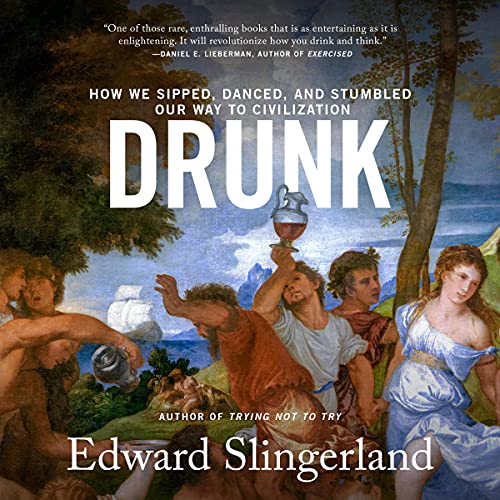
Book Details
- Genre: Anthropology / Psychology / Cultural History
- Narrator: Edward Slingerland
- Themes:
- Evolutionary role of intoxication
- Cultural rituals and bonding
- Creativity, trust, and group cohesion
- Controlled disinhibition
- Substance use and civilization
One-Sentence Summary
Edward Slingerland argues that our long, complex relationship with alcohol and intoxication isn’t a bug of human evolution—but a feature that has helped build trust, creativity, and cooperation in civilizations across history.
Main Takeaways & Insights
- The Paradox of Intoxication: Humans have developed biological systems to avoid toxins—yet we intentionally seek out alcohol and mind-altering substances. Why? Because they serve real social and psychological functions.
- Alcohol as a Social Technology: Far from being purely destructive, alcohol has historically helped humans lower inhibitions, foster trust in large groups, negotiate alliances, and inspire creativity.
- The Costly Signal Theory: Engaging in drunken rituals signals authenticity. You can’t fake sincerity while intoxicated, which builds trust in high-stakes situations—like diplomacy, trade, or religious ceremonies.
- Creativity & Disinhibition: Mild intoxication has been linked with enhanced creativity and problem-solving. Ancient poets, philosophers, and even early innovators often worked within cultural contexts where alcohol played a central role.
- The Dark Side Exists—But Isn’t the Whole Story: While addiction and abuse are real, focusing only on harm ignores alcohol’s evolutionary advantages. Societies that integrated it responsibly flourished.
- Modern Risks & Mismatches: Industrial-scale alcohol production and societal isolation have created mismatches with how humans evolved to use intoxicants—in communal, ritualized, and regulated settings.
Key Quotes
“Drunkenness is not a maladaptive trait but a cultural innovation that has helped humans survive and thrive.”
“If you want to understand why people gather in bars, dance at weddings, or make toasts at funerals, you have to understand the function of alcohol in human evolution.”
“In an ironic twist, our moments of greatest inebriation may have contributed to our greatest cultural achievements.”
Personal Reflection
Slingerland’s thesis challenges conventional narratives by presenting intoxication not as a flaw of civilization, but as a key ingredient in its recipe. The strength of the book lies in its interdisciplinary synthesis—drawing from anthropology, neuroscience, philosophy, and history to make a nuanced case. It’s not a celebration of recklessness, but a compelling argument for why humans, in moderation and context, have always turned to altered states to make sense of their world—and each other. A refreshingly intelligent toast to our messy, meaningful humanity.
