
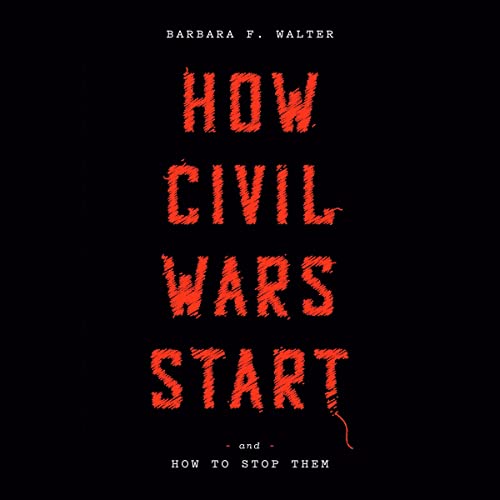
Book Details
- Genre: Political Science / Sociology / Current Affairs
- Narrator: Maxwell Hamilton
- Themes:
- Democratic backsliding
- Political polarization
- Civil conflict triggers
- Institutional fragility
- Preventing domestic instability
One-Sentence Summary
Barbara F. Walter, drawing from decades of global conflict research, warns that the conditions leading to civil wars abroad are increasingly visible in the United States—and outlines how we can act to prevent catastrophe.
Main Takeaways & Insights
- Democracies Don’t Die Overnight: Civil wars rarely begin with a bang; they tend to emerge gradually as democracies backslide into partial autocracies, losing public trust in institutions.
- The Danger Zone: Anocracy: Countries in transition—neither fully autocratic nor fully democratic—are statistically the most vulnerable to civil wars, especially when ethnic or identity-based factions dominate politics.
- Ethnic Entrepreneurs and Factionalism: When leaders use ethnic, racial, or religious identity to mobilize power—often blaming outsiders or the “other side”—societal divisions deepen dangerously.
- Warning Signs: Key indicators include weakened rule of law, loss of institutional legitimacy, rising political violence, normalization of conspiracies, and the mainstreaming of extremism.
- The U.S. Is Not Immune: Walter argues that the U.S. has entered the danger zone, especially after the erosion of democratic norms, January 6th, and growing militia and anti-government movements.
- How to Prevent Collapse: Strengthening democratic institutions, depolarizing politics, and reducing the influence of identity-based factions are critical. Civil society and nonpartisan media play essential roles.
Key Quotes
“Civil wars rarely look like they do in the movies. They don’t begin with a formal declaration. They sneak up on you.”
“When people stop believing that their voice matters, they stop using it—and some begin to seek power through violence.”
“We ignore the warning signs not because they aren’t there, but because we convince ourselves it couldn’t happen here.”
Personal Reflection
Walter’s background as a global conflict researcher lends this book its sobering credibility. Her framework—grounded in empirical data, not hyperbole—forces a re-examination of the democratic complacency many in the West have clung to. What makes this book so compelling is its urgency without sensationalism. It’s both a diagnosis and a prescription, urging vigilance, institutional reform, and civic responsibility before it’s too late. A necessary read in turbulent times.
