
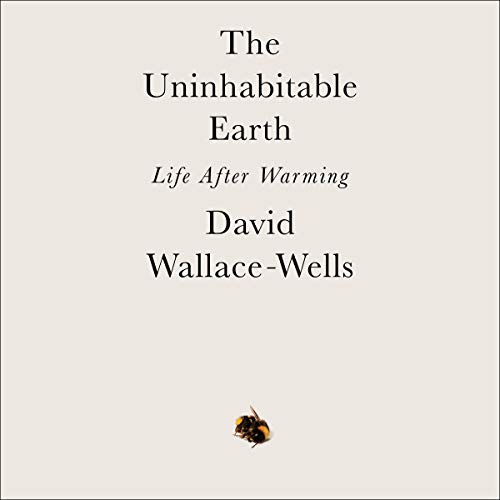
Book Details
- Genre: Non‑Fiction / Climate Science / Environmental Journalism
- Themes:
- Climate Change Impacts and Projections
- Societal and Economic Disruption
- Human Adaptation and Resilience
- Ethical and Policy Responses
One-Sentence Summary
Wallace‑Wells delivers a stark, meticulously researched portrait of the near‑term consequences of global warming—arguing that unless we radically alter our social, economic, and political systems, much of the planet will become increasingly hostile to human life.
Main Takeaways & Insights
- Heat, Drought, and Famine: Rising temperatures will intensify heat waves and droughts, imperiling food production and threatening mass displacement.
- Extreme Weather and Sea‑Level Rise: More powerful storms and accelerating glacier melt will inundate coastal regions, disrupting cities and economies on an unprecedented scale.
- Economic and Political Instability: Climate shocks will strain resources, exacerbate inequality, and fuel conflict—undermining global security and development.
- Feedback Loops and Uncertainty: Tipping points—such as methane release from thawing permafrost—could trigger runaway warming, making the crisis far worse than current models predict.
- Moral Imperative for Action: Wallace‑Wells underscores that mitigation and adaptation aren’t optional; they are urgent moral choices if we value human life, equity, and the planet’s ecosystems.
Key Quotes
“By the year 2100, more than a billion people could find themselves living in regions where the temperature is as hot as it is in the Sahara today.”
“We have yet to grapple with the truly horrific possibilities of global warming, not decades in the future but starting, really, right now.”
“Stabilization at any temperature much below catastrophic will require a fundamental transformation of the global economy.”
Personal Reflection
The Uninhabitable Earth is a harrowing wake‑up call that transcends apocalyptic doom‑mongering by grounding its grim scenarios in rigorous science and sober analysis. Wallace‑Wells compels us to reckon with a future we’ve long ignored, but he also points toward the collective agency we still possess. His narrative leaves you unsettled—and rightfully so—but it also inspires a fierce urgency: to innovate, to mobilize, and to fight for a livable world before the tipping points we fear become the tipping points we can no longer avert.
