
Book Details
- Genre: History / Canadian Identity
- Themes:
- Colonial Conflict & Coexistence
- Indigenous Sovereignty & Resistance
- Cultural Hybridity
- Nation-Building
- Historical Legacy
One-Sentence Summary
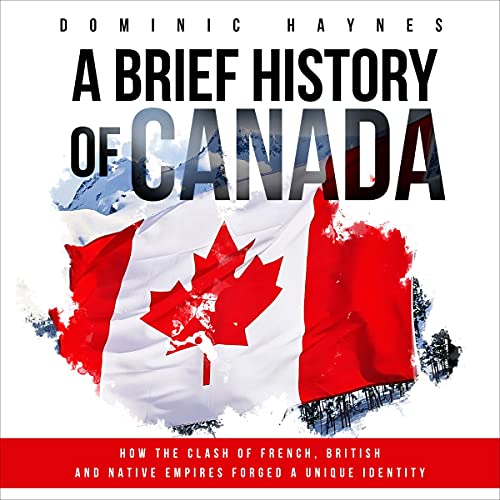
Dominic Haynes distills centuries of Canadian history into a concise yet impactful narrative that explores how the tensions and cooperation between French settlers, British colonists, and Indigenous nations gave rise to a uniquely Canadian identity.
Main Takeaways & Insights
- A Nation Born of Collision, Not Consensus: Canada’s formation was not a peaceful process but rather a complex entanglement of competing imperial ambitions and Indigenous resistance.
- French vs. British Rivalry: The struggle for control over territory and influence between these European powers shaped the early Canadian political and cultural landscape, especially post-1763.
- The Indigenous Perspective: Indigenous peoples were not passive observers but central actors—diplomatically, militarily, and culturally—in shaping early Canada, and their legacy continues to challenge the national narrative.
- The Quiet Revolution & Modern Identity: The book links the historical roots of cultural dualism to contemporary Canadian dynamics, especially Quebec’s evolving place in the federation.
- Canada as a Mosaic, Not a Melting Pot: Haynes highlights how compromise, multicultural policies, and bilingualism were forged from conflict and are essential to understanding Canadian uniqueness today.
Key Quotes
“Canada was not born with a bang or a proclamation—it emerged from centuries of unfinished conversations.”
“To understand Canada, one must first understand the silence between its histories.”
“In the enduring legacy of First Nations, French, and British peoples lies the paradox of a nation built both on division and dialogue.”
Personal Reflection
This book compresses an expansive and often overlooked narrative into an accessible format without oversimplifying it. Haynes demonstrates a rare ability to balance historical rigor with cultural insight, painting Canada not as a polished product of diplomacy, but as a patchwork sewn together through conflict, negotiation, and ongoing reinterpretation. It made me reflect on the quiet complexity that defines Canadian identity—how being Canadian often means holding contradictions, yet choosing coexistence anyway. This is essential reading for anyone seeking to grasp the deep, sometimes painful, roots of Canada’s present-day ethos.
