
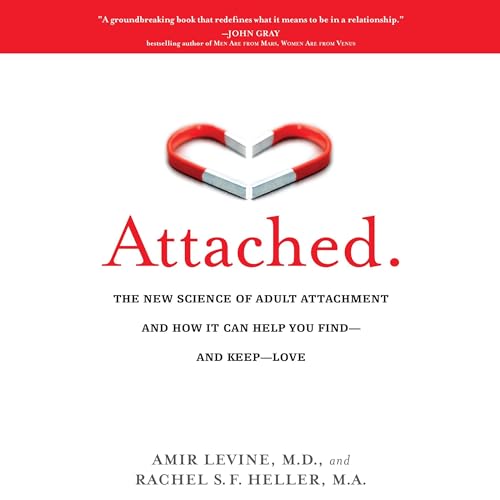
Book Details
• Genre: Psychology / Relationships / Neuroscience
• Narrator: Robert Petkoff (audiobook)
• Themes:
• Adult Attachment Theory
• Relationship Compatibility
• Emotional Regulation
• Communication Patterns
• Secure vs. Insecure Bonding
One-Sentence Summary
By applying adult attachment theory to romantic relationships, Levine and Heller reveal how understanding your attachment style—and that of your partner—can dramatically improve connection, communication, and emotional security.
Main Takeaways & Insights
• Three Core Attachment Styles: People generally fall into Secure, Anxious, or Avoidant categories—each shaping how they approach intimacy and conflict.
• Secure Attachment is the Ideal: Secure individuals create safety in relationships through consistency, responsiveness, and clear communication.
• Anxious Types Crave Closeness: These individuals tend to worry about being abandoned or unloved, often leading to clinginess or overanalysis.
• Avoidant Types Resist Dependency: They prioritize independence and can struggle with emotional closeness, often sending mixed signals.
• Knowing Your Type Changes Everything: Once identified, your attachment style becomes a map—helping you recognize triggers, navigate friction, and choose compatible partners.
• Communication is Attachment-Based: Misunderstandings often stem from differing attachment needs and expectations—not from lack of love or effort.
• You Can “Earn” Secure Attachment: Through self-awareness and healthier relationship models, individuals can shift away from anxious or avoidant tendencies.
Key Quotes
“Understanding attachment is the key to building lasting, loving relationships.”
“People with a secure attachment style are comfortable with intimacy and are usually warm and loving.”
“Anxious individuals tend to worry about their partner’s ability to love them back.”
“Avoidants equate intimacy with a loss of independence and constantly try to minimize closeness.”
“Attachment isn’t about dependency—it’s about interdependence.”
Personal Reflection
Attached unpacks one of the most vital yet under-discussed elements of adult relationships: how our emotional wiring governs intimacy. This book isn’t just theoretical—it’s a deeply practical guide to self-discovery, offering clarity on both the ‘why’ and ‘how’ of relationship patterns. What stood out most was its compassion: rather than assigning blame, it invites us to observe, understand, and evolve. Whether you’re single or partnered, this insight is relationship-altering.
