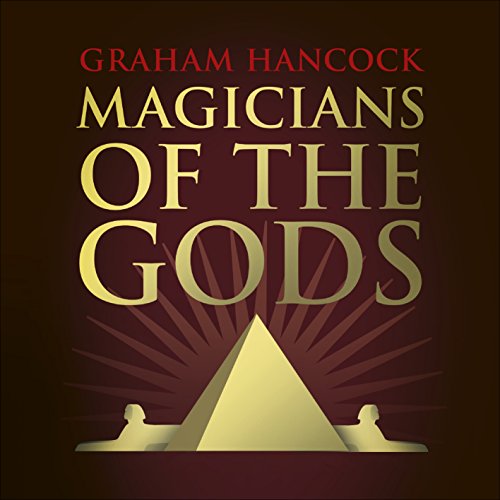
Book Details
• Genre: Ancient History, Alternative Archaeology
• Narrator: Graham Hancock
• Themes:
• Lost Civilizations
• Cataclysmic Events and Human Memory
• Ancient Knowledge and Mythology
• Rejection of Mainstream Narratives
• Interdisciplinary Archaeology and Astronomy
One-Sentence Summary
Graham Hancock presents a provocative case for a forgotten advanced civilization destroyed by a global cataclysm around 12,800 years ago, arguing that ancient monuments and myths preserve fragments of this lost wisdom that challenges mainstream historical timelines.
Main Takeaways & Insights
• The Younger Dryas Cataclysm Hypothesis
Hancock supports emerging evidence that a massive comet impact triggered sudden climate change, wiping out advanced human cultures and resetting civilization’s clock.
• Göbekli Tepe’s Significance
He argues that the 12,000-year-old megalithic site in Turkey, predating known agriculture and cities, points to lost knowledge and organization inconsistent with hunter-gatherer capabilities.
• Encoded Warnings in Myths
Ancient myths and religious texts, from Plato’s Atlantis to the Epic of Gilgamesh, are reinterpreted as encoded historical memories of pre-cataclysm civilizations warning future generations.
• Censorship in Academia
The book critiques orthodox archaeology for suppressing dissenting views and clinging to outdated timelines despite mounting geological and astronomical evidence.
• A Call for Open Inquiry
Rather than claiming absolute answers, Hancock invites readers to question dogma, reevaluate ancient knowledge, and consider how modern society may also be vulnerable to forgotten cosmic forces.
Key Quotes
“History is not just what we’re told—it’s what we’ve forgotten.”
“We are a species with amnesia.”
“Göbekli Tepe changes everything we thought we knew about the origins of civilization.”
“The warnings of the ancients were not myths; they were memories.”
“It’s time to rethink our past if we hope to protect our future.”
Personal Reflection
Magicians of the Gods is not a conventional historical narrative—it’s a deeply unsettling, stimulating blend of hard science and mythological interpretation. Whether one agrees with Hancock or not, his interdisciplinary approach compels the reader to reevaluate accepted truths. The emphasis on humility in the face of ancient wisdom is striking, especially in an era of technological hubris. His skepticism of institutional rigidity isn’t anti-science—it’s a plea for better science, open science. This book challenges comfort zones and intellectual echo chambers, offering a powerful reminder that the past may hold more truths than we’ve dared to imagine.
