
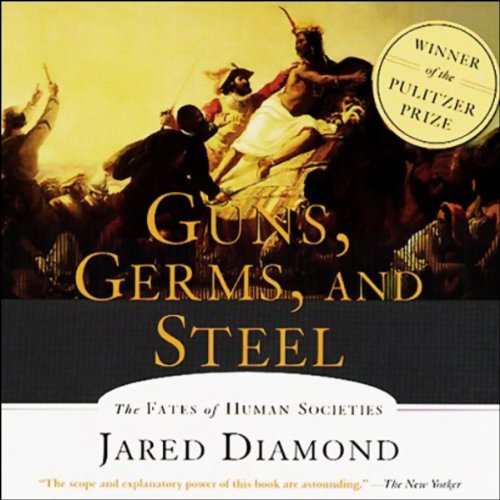
Book Details
• Genre: History, Anthropology, Geography
• Narrator: Doug Ordunio (varies by edition)
• Themes:
• Geographic Determinism
• Development of Societies
• Domestication of Plants and Animals
• Technological Diffusion
• Inequality and Global Power
One-Sentence Summary
Jared Diamond investigates why some civilizations advanced faster than others, arguing that geography, rather than inherent differences in intelligence or culture, largely determined the fate of human societies through access to domesticable species, disease resistance, and diffusion of technology.
Main Takeaways & Insights
• Geography Shapes Destiny
Civilizations with access to fertile land and domesticable animals had a head start in agriculture, leading to population growth, specialization, and eventual dominance.
• Germs Were Weapons
Eurasian societies developed immunity to deadly diseases due to animal domestication, later using those pathogens—often unknowingly—as tools of conquest against immunologically naïve populations.
• Technology Spreads Unevenly
The orientation of continents (east-west vs. north-south) affected how easily innovations like agriculture and metallurgy could travel, influencing the pace of societal development.
• Food Surplus Led to Power Structures
Reliable food sources enabled social stratification, the rise of political institutions, and the ability to wage war or organize labor on a grand scale.
• Rejects Racial Explanations for Inequality
Diamond firmly contends that environmental factors—not racial or genetic superiority—explain the uneven development of civilizations.
Key Quotes
“History followed different courses for different peoples because of differences among peoples’ environments, not because of biological differences.”
“The biggest advantage of food production is not food itself but the ability to support specialists.”
“Germs played a key role in European conquest, often more decisive than guns or steel.”
“Domestication is not about taming, but about control over breeding.”
“Geography, not ingenuity, largely determined the winners of history.”
Personal Reflection
This book reframed my understanding of inequality—not as a result of effort or intelligence but as a consequence of environmental luck. Diamond’s interdisciplinary lens is ambitious, connecting ecology, anthropology, and politics into a cohesive theory of human history. While some critiques point out oversimplifications, the central thesis remains a powerful counter to narratives of cultural or racial superiority. It’s a must-read for anyone questioning how the world came to be as it is.
