
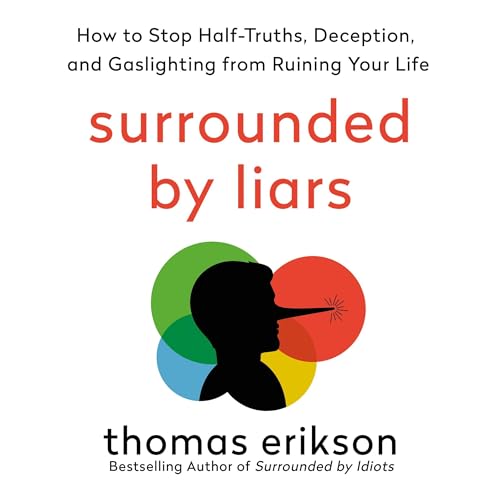
Book Details
• Genre: Psychology, Self-Help, Communication
• Narrator: David John (audiobook version may vary)
• Themes:
• Deception and Manipulation
• Gaslighting and Emotional Abuse
• Psychological Defense Mechanisms
• Truth-Seeking Behavior
• Behavioral Typologies and Awareness
One-Sentence Summary
Thomas Erikson examines how deception operates in personal and professional life, equipping readers with psychological tools and behavioral frameworks to identify liars, protect themselves from manipulation, and restore clarity in a world distorted by half-truths.
Main Takeaways & Insights
• Liars Exploit Your Blind Spots
Manipulators often prey on emotional vulnerabilities or social norms, making it essential to understand your own weaknesses to protect yourself.
• Gaslighting Is a Gradual Erosion
The most dangerous lies aren’t shouted—they’re whispered over time to chip away at your confidence and reality, often by people close to you.
• Behavioral Profiling Exposes Patterns
Using his color-personality model (Red, Yellow, Green, Blue), Erikson explains how each type both detects and falls prey to deception differently.
• Truth Requires Courage and Clarity
Seeing the truth demands both awareness and the will to confront discomfort, especially when truth-tellers are punished more than deceivers.
• Boundaries Are Non-Negotiable
Whether in relationships or workplaces, establishing emotional boundaries is key to deflecting manipulation and maintaining psychological health.
Key Quotes
“Liars don’t need to be clever—just believable.”
“Gaslighting works best when you begin to doubt yourself.”
“Half-truths are whole lies with better PR.”
“Your desire to be liked is their strongest weapon.”
“You can’t stop liars from lying, but you can stop yourself from listening.”
Personal Reflection
This book resonates like a wake-up call in an age of misinformation and emotional manipulation. Erikson dissects not only why others lie, but why we so often allow it. His behavioral model adds nuance, showing that deception doesn’t occur in a vacuum—it exploits our personality traits and needs. I found his emphasis on self-awareness and boundaries deeply practical. It reminds us that protecting our peace isn’t about paranoia, but presence, clarity, and unshakable self-respect.
