
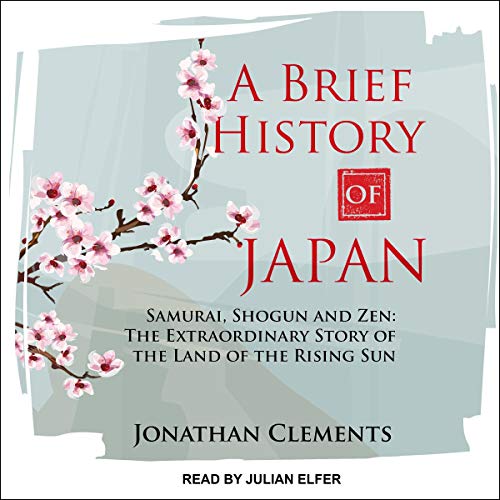
by Jonathan Clements
Book Details
• Genre: History, East Asian Studies, Cultural Anthropology
• Narrator: Jonathan Clements (varies by edition)
• Themes:
• Feudalism and Samurai Culture
• Political Power and Shogunate Rule
• Zen Buddhism and Spiritual Identity
• Isolationism and Modernization
• Cultural Continuity and Transformation
One-Sentence Summary
Jonathan Clements offers a concise yet rich account of Japan’s complex evolution—from prehistoric origins and samurai clans to imperial modernity and post-war reinvention—tracing the enduring values and contradictions of a nation shaped by honor, discipline, and adaptability.
Main Takeaways & Insights
• Samurai and the Soul of Feudal Japan
The warrior class wasn’t just a military elite—it was a cultural and moral force that defined Japan’s values of loyalty, honor, and sacrifice for centuries.
• Shoguns, Not Emperors, Held Power
While emperors remained symbolic, real authority rested in the hands of shoguns who governed through strategic warfare, diplomacy, and regional alliances.
• Zen as a Cultural Catalyst
Zen Buddhism influenced everything from martial arts to art, architecture, and personal conduct—becoming an aesthetic and philosophical backbone of Japanese identity.
• Isolation Shaped Innovation
Japan’s policy of sakoku (closed country) during the Tokugawa era allowed internal stability and cultural preservation, which paradoxically laid the groundwork for rapid modernization after it reopened.
• Continuity Through Chaos
Despite dramatic transformations—from samurai rule to industrial empire to wartime devastation and democratic rebirth—Japan maintained a deep continuity in cultural self-perception and social cohesion.
Key Quotes
“Samurai were not just swordsmen—they were a symbol of order in a land of shifting loyalties.”
“In Japan, the emperor reigned, but rarely ruled.”
“Zen’s greatest legacy is not belief, but behavior.”
“Japan’s isolation was not stagnation—it was an incubation.”
“The past in Japan is never truly past—it’s repackaged, reinterpreted, and reborn.”
Personal Reflection
This history doesn’t just recount dates and dynasties—it decodes the soul of a civilization. Clements brings clarity to a rich and often misunderstood timeline, illuminating how Japan’s contradictions—militarism and peace, tradition and innovation—are precisely what make it enduringly fascinating. The book is both a crash course and a cultural meditation, offering context for Japan’s present through the lens of its remarkable past.
