
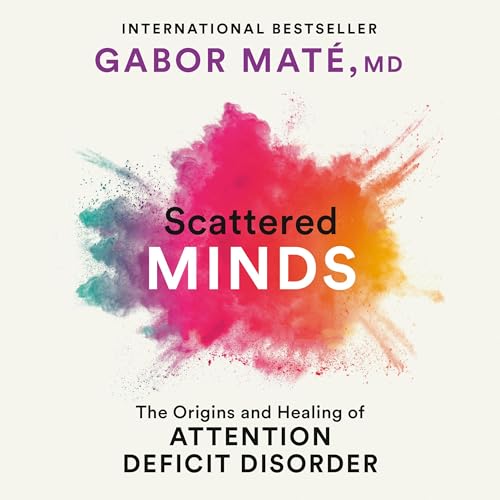
by Gabor Maté MD
Book Details
- Genre: Psychology · Neuroscience · Mental Health · Parenting
- Author: Dr. Gabor Maté — physician specialising in neurology, psychiatry, and psychology, and himself diagnosed with ADD
- Themes: ADD as developmental impairment · The role of early childhood environment · Stress, cortisol, and brain development · Emotional attunement and parent-child connection · Healing and neurological growth in adulthood
One-Sentence Summary
A compassionate and revelatory reframing of ADD — not as a genetic illness but as a reversible developmental impairment shaped by early environment, chronic stress, and the quality of emotional attunement experienced in childhood.
Main Takeaways & Insights
- ADD Is Not an Inherited Illness — It Is a Developmental Impairment Maté’s central and most provocative argument is that ADD is not simply a genetic condition passed from parent to child. While genetics may create a predisposition, it is the environment — specifically the emotional environment of infancy and early childhood — that determines whether those circuits develop or fail to develop. The brain circuits responsible for attention control and emotional self-regulation are shaped by experience, not fixed at birth. This is not a small distinction. It changes everything about how we understand, treat, and respond to ADD.
- Distractibility Is a Survival Strategy, Not a Character Flaw One of the most humanising insights in the book is Maté’s reframing of “tuning out.” The ADD child who cannot maintain attention is not being wilfully difficult — they learned, early and unconsciously, to disconnect from an environment that was emotionally overwhelming or unpredictable. Distractibility began as a coping mechanism. The mind that cannot focus was once a mind protecting itself. Understanding this transforms judgement into compassion — for parents of ADD children, and for adults who have spent decades berating themselves for a pattern they never chose.
- Stress and Cortisol Deprive the Developing Brain of Dopamine Maté explains the neurological mechanism behind ADD with clarity. When an infant or young child experiences chronic stress — including the subtle but profound stress of emotional unavailability from a caregiver — elevated cortisol levels deplete dopamine in the developing brain. Dopamine is essential for attention, motivation, and reward processing. Its absence during critical developmental windows means the circuits that should have formed simply do not. The implications are profound: what looks like a neurological disorder may in many cases be the neurological legacy of unmet emotional need.
- Attunement — Not Discipline — Is the Missing Variable Maté introduces the concept of attunement — the capacity of a caregiver to sense, reflect, and respond to an infant’s emotional states. It is not about being a perfect parent. It is about being emotionally present. When attunement is consistent, the child’s nervous system learns safety, regulation, and the capacity to focus. When it is absent — not through cruelty but through stress, depression, busyness, or the caregiver’s own unresolved trauma — the child’s developing brain is left without the scaffolding it needs. This insight carries no blame. It carries understanding.
- Neurological Development Is Possible in Adulthood — There Is Real Hope Perhaps the most important and least-known aspect of the book is its optimism. Maté argues that the brain retains a degree of plasticity throughout life. With the right environment — compassionate relationships, reduced chronic stress, mindfulness, and appropriate support — adults with ADD can continue to develop the circuits that did not fully form in childhood. This is not a promise of cure. It is something more honest and more useful: the possibility of genuine growth, at any age.
Key Quotes
“Never at rest, the mind of the ADD adult flits about like some deranged butterfly that can light here or there for a while but is perched nowhere long enough to make a home.” “It is not that the ADD child or adult is not trying hard enough. The problem is that trying is not enough when the neurological equipment is not yet developed.” “When certain genetic material meets certain environmental conditions, ADD may result.” “If we can actively love, there will be no attention deficit and no disorder.”
Personal Reflection
What Maté does in Scattered Minds is rare in medical literature: he brings together rigorous science and profound human compassion without sacrificing either. Writing as both a physician and a person living with ADD, he never positions himself above his subject. He is inside it. The result is a book that doesn’t just inform — it validates. For anyone who has ever been told they are lazy, unfocused, or not trying hard enough, this book offers a different story. One rooted in neuroscience, developmental psychology, and an unflinching honesty about what children need and what the modern world too rarely provides. It does not excuse. It explains. And in explaining, it opens a door to something that diagnosis alone never can — genuine understanding of the self.
Leave a Reply