
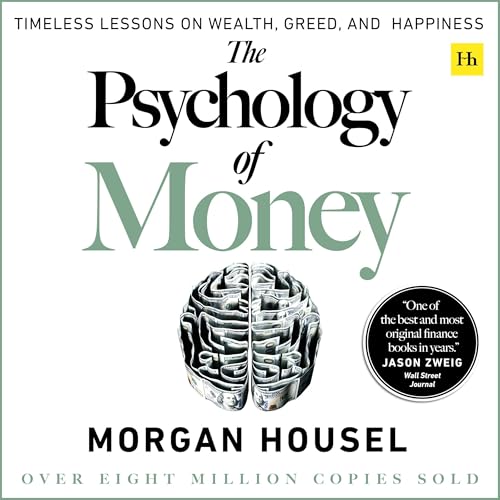
by Morgan Housel
Book Details
- Genre: Finance, Behavioral Economics, Psychology
- Narrator: Chris Hill (audiobook)
- Themes: Wealth and human behavior · Financial decision-making · Long-term thinking · Risk and uncertainty · Emotional intelligence in finance
One-Sentence Summary
Morgan Housel explores how our personal relationship with money—shaped more by psychology than logic—determines our financial outcomes, and why mastering behavior matters more than mastering spreadsheets.
Main Takeaways & Insights
- Financial Success Is More About Behavior Than Knowledge Wealth accumulation isn’t just a matter of IQ or technical skills—it’s about patience, humility, and emotional control. Daniel Kahneman explains the mental shortcuts behind much of this behaviour in Thinking, Fast and Slow.
- Luck and Risk Are Inseparable and Often Invisible Outcomes are rarely the result of effort alone. Appreciating the role of randomness helps avoid arrogance in success and despair in failure.
- Compounding Is Magic—but Requires Time and Restraint Time is the most powerful force in finance. Warren Buffett’s wealth is largely due to starting early and compounding for decades, not necessarily achieving the highest returns. The Richest Man in Babylon taught the same lesson as a parable, nearly a century earlier.
- Wealth Is What You Don’t See Spending to signal wealth can destroy the very wealth you’re trying to display. Real wealth is invisible—it’s saved, not flaunted.
- Reasonable Beats Rational Financial decisions don’t have to be textbook-optimal. What matters most is that they are reasonable and sustainable for you. Charles Mackay’s Extraordinary Popular Delusions and the Madness of Crowds shows what happens when whole crowds stop being reasonable.
Key Quotes
“Wealth is what you don’t see.” “Doing well with money has little to do with how smart you are and a lot to do with how you behave.” “Controlling your time is the highest dividend money pays.”
“The more he saw the less he spoke; the less he spoke the more he heard.” — traditional verse (The Wise Old Owl), not Housel’s own words, but it captures the mood of the book anyway.
Lesson: The best financial instinct might just be knowing when to stay quiet.
Personal Reflection
Housel’s insights strip away the ego and noise from traditional financial advice. This book isn’t about tactics—it’s about timeless principles rooted in humility, patience, and perspective. It challenges the belief that wealth is earned through genius and replaces it with the idea that wealth is often kept through restraint. The simplicity of his writing masks profound truths about human nature, risk tolerance, and long-term thinking. For anyone building or protecting wealth, this is essential reading.
The Wise Old Owl — Listen More, Speak Less
Traditional verse: “A wise old owl lived in an oak, the more he saw the less he spoke, the less he spoke the more he heard.”
There’s an old children’s verse about an owl that fits this book better than it has any right to. The owl doesn’t get wiser by talking — it gets wiser by paying attention. That’s basically Housel’s whole argument dressed up in feathers. The investors who do best aren’t the ones with the sharpest hot takes; they’re the ones who’ve trained themselves to watch, wait, and resist the urge to react to every headline. Speak less, and you start hearing more — what’s actually happening, not just what you’re afraid might happen.
Key Takeaway: You don’t need an opinion on everything. You don’t need to call the next move in the market. Some of the best financial decisions look like doing nothing at all — staying quiet, staying curious, and letting time show you what wasn’t obvious at the start.
Leave a Reply